



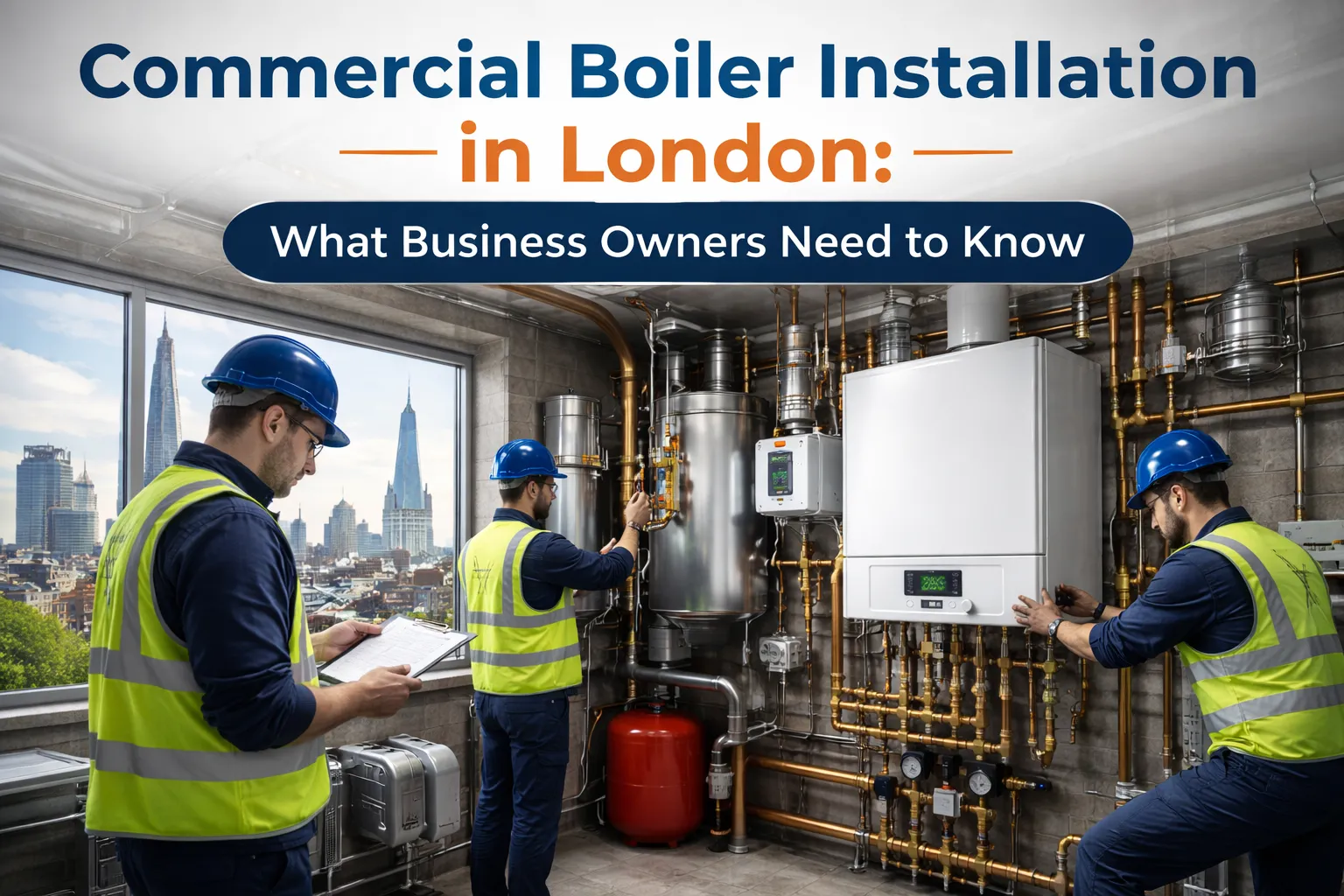
Commercial boiler installation plays a critical role in keeping London businesses warm, operational, and compliant with safety regulations. Whether you manage an office, retail space, hospitality venue, or commercial building, understanding how commercial boiler installation works helps you plan effectively and avoid disruption.
This guide explains the process, system types, regulations, and key considerations business owners in London should be aware of before installing a commercial boiler.
What Is a Commercial Boiler?
A commercial boiler is a heating system designed to meet the demands of larger or multi-use buildings. Unlike domestic boilers, commercial systems are built for higher output, longer operating hours, and more complex heating requirements.
Commercial boilers are commonly used in:
- Offices and corporate buildings
- Retail units and shopping centres
- Restaurants, hotels, and hospitality venues
- Warehouses and industrial spaces
- Schools, care homes, and medical facilities
- Apartment blocks and shared residential buildings
When Is Commercial Boiler Installation Required?
Businesses in London may require a new commercial boiler installation when:
- An existing boiler no longer meets heating demand
- The system experiences frequent faults or shutdowns
- The building has been extended or repurposed
- Heating performance is inconsistent across the property
- The system no longer meets current safety or efficiency standards
Installing a new boiler can help improve reliability, comfort, and long-term system performance.
Common Types of Commercial Boilers Used in London
Gas Commercial Boilers
Gas boilers remain one of the most widely used options for commercial properties in London due to their reliability and compatibility with existing infrastructure.
Condensing Commercial Boilers
Condensing boilers are designed to operate more efficiently by recovering heat from exhaust gases, making them suitable for businesses focused on energy efficiency and sustainability.
Modular Boiler Systems
Modular systems use multiple smaller boilers operating together. These systems provide flexibility, redundancy, and better load management for buildings with varying heating demands.
Electric and Low-Carbon Heating Systems
In some London properties, electric boilers or low-carbon alternatives are used where gas is unavailable or where environmental objectives are a priority.
How Commercial Boiler Installation Works
Initial Site Survey and System Assessment
A commercial heating engineer will assess:
- Building size and layout
- Heating and hot water requirements
- Existing pipework and infrastructure
- Ventilation and flue arrangements
This assessment ensures the system is correctly designed for the property’s needs.
System Design and Boiler Selection
The installation plan includes selecting a boiler and system layout that aligns with:
- Operational requirements
- Building usage patterns
- Space constraints
- Regulatory compliance
Correct system design is essential for long-term efficiency and reliability.
Installation and Commissioning
The installation process typically includes:
- Removal or isolation of old equipment
- Installation of the new boiler and controls
- Connection to pipework, flues, and safety systems
- Testing and commissioning
Commissioning ensures the system operates safely and efficiently before handover.
Regulations and Compliance for Commercial Boilers in London
Commercial boiler installations in London must comply with:
- Gas Safety Regulations
- Building Regulations
- Commercial energy efficiency requirements
- Manufacturer installation guidelines
All work must be carried out by Gas Safe registered engineers qualified for commercial heating systems. Compliance helps protect occupants, property owners, and businesses.
Importance of Correct Boiler Sizing and System Design
Correct sizing ensures:
- Consistent heating throughout the building
- Reduced system strain
- Improved operational efficiency
- Longer equipment lifespan
Oversized or undersized systems can lead to performance issues and unnecessary maintenance problems.
Maintenance After Commercial Boiler Installation
Once installed, regular maintenance is essential to keep the system operating safely and efficiently.
Routine servicing helps:
- Prevent unexpected breakdowns
- Maintain heating performance
- Ensure compliance with safety regulations
- Extend the lifespan of the boiler
Many London businesses choose planned maintenance schedules to minimise disruption.
Choosing a Commercial Boiler Installer in London
When selecting a commercial boiler installer, business owners should look for:
- Commercial Gas Safe registration
- Experience with similar building types
- Knowledge of London-specific regulations
- Clear communication and documentation
- Ongoing support and maintenance options
Choosing the right installer ensures the system performs reliably long after installation.
Final Considerations for London Business Owners
Commercial boiler installation is a significant decision that affects comfort, safety, and daily operations. By understanding the process, system options, and regulatory requirements, London business owners can make informed choices and ensure their heating systems meet long-term needs.